
Shoulder pain can make even simple tasks feel difficult. Raising your arm to reach a shelf, putting on a shirt, lifting groceries, or playing your favorite sport may trigger discomfort that refuses to go away. When these symptoms continue despite rest, medication, or physical therapy, Subacromial decompression may become a recommended treatment option.
Subacromial decompression is a minimally invasive surgical procedure designed to relieve pressure around the rotator cuff tendons. By creating more space beneath the acromion, the procedure helps reduce pain, improve shoulder movement, and support long-term shoulder function. Many patients experience significant relief after surgery when conservative treatments have not produced the desired results.
At Lao Orthopedic Clinic, patients receive comprehensive evaluation and personalized treatment plans for shoulder conditions. Dr. Lawrence Lao combines advanced arthroscopic techniques with structured rehabilitation to help patients return to work, sports, and daily activities safely.
What Is Subacromial Decompression?
Subacromial decompression is an arthroscopic shoulder procedure performed to reduce pressure beneath the acromion, the upper portion of the shoulder blade. This pressure often affects the rotator cuff tendons and the bursa, leading to persistent shoulder pain and limited movement.
During Subacromial decompression, the surgeon uses a small camera called an arthroscope along with specialized instruments inserted through tiny incisions. Inflamed tissue may be removed, and bone spurs may be smoothed or removed to create additional space for the rotator cuff tendons.
The primary goal of Subacromial decompression is to reduce irritation, improve shoulder mechanics, and restore comfortable movement while preserving healthy surrounding structures.
Because the procedure uses minimally invasive techniques, patients often benefit from smaller incisions, less tissue damage, and a recovery process that may be quicker than traditional open surgery.
Understanding Shoulder Impingement Syndrome
Shoulder impingement syndrome develops when the rotator cuff tendons become compressed beneath the acromion during arm movement. Repeated irritation causes inflammation, swelling, and pain that gradually limits shoulder function.
The shoulder depends on several muscles, tendons, ligaments, and bones working together. The rotator cuff stabilizes the shoulder joint while allowing smooth movement. When available space beneath the acromion becomes reduced, the tendons repeatedly rub against nearby bone.
Over time, this repeated contact may lead to chronic inflammation, bursitis, tendon damage, or partial rotator cuff tears.
Subacromial decompression addresses this mechanical problem by creating more room for the tendons to move without excessive friction.
Common Causes of Shoulder Impingement
Several factors may contribute to shoulder impingement.
Frequent overhead activities remain one of the leading causes. Construction workers, painters, electricians, warehouse employees, swimmers, tennis players, volleyball athletes, and baseball players place repeated stress on the shoulder during daily activities or sports.
Age-related changes also increase the likelihood of shoulder impingement. Bone spurs may gradually develop beneath the acromion, reducing the available space for tendon movement.
Previous shoulder injuries may alter normal shoulder mechanics and increase pressure on the rotator cuff.
Other contributing factors include:
- Repetitive lifting
- Poor posture
- Muscle weakness
- Shoulder instability
- Previous fractures
- Chronic inflammation
- Degenerative shoulder changes
Proper evaluation helps determine whether Subacromial decompression represents the most appropriate treatment for each patient.
Symptoms That May Suggest You Need Subacromial Decompression
Persistent shoulder discomfort often develops gradually. Many people notice symptoms becoming worse over several weeks or months.
Common signs include:
- Pain while lifting the arm
- Pain during overhead activities
- Difficulty reaching behind the back
- Nighttime shoulder pain
- Weakness during lifting
- Limited shoulder movement
- Clicking or catching sensations
- Difficulty dressing
- Pain while carrying objects
- Reduced athletic performance
These symptoms may interfere with work responsibilities, exercise routines, and everyday household activities.
When conservative care fails to improve these symptoms, Subacromial decompression may become a suitable treatment option.
When Is Subacromial Decompression Recommended?
Most patients begin treatment with non-surgical methods before surgery becomes necessary.
Initial treatment may include:
- Activity modification
- Anti-inflammatory medication
- Physical therapy
- Home exercise programs
- Ice therapy
- Corticosteroid injections
Many patients improve with these treatments. Surgery becomes a consideration when shoulder pain continues despite several months of conservative care.
A physician may recommend Subacromial decompression when:
- Pain remains persistent.
- Shoulder movement continues to decrease.
- Daily activities become difficult.
- Imaging studies confirm shoulder impingement.
- Physical therapy no longer provides improvement.
- Rotator cuff irritation continues despite treatment.
Careful evaluation helps determine whether surgery offers the greatest benefit for each patient’s condition.
How Shoulder Impingement Is Diagnosed
Accurate diagnosis serves as the foundation of successful treatment.
The evaluation begins with a detailed discussion about symptoms, work activities, sports participation, previous injuries, and overall health.
A physical examination allows the orthopedic surgeon to assess:
- Shoulder strength
- Range of motion
- Areas of tenderness
- Stability
- Muscle function
- Specific movements that reproduce pain
Diagnostic imaging provides additional information.
X-rays help identify bone spurs and structural changes.
Magnetic Resonance Imaging (MRI) allows detailed assessment of the rotator cuff tendons, muscles, cartilage, and surrounding soft tissues.
Ultrasound may also help evaluate tendon movement and inflammation.
These findings help determine whether Subacromial decompression offers the most appropriate solution.
What Happens During Subacromial Decompression Surgery?
Subacromial decompression usually takes place under general anesthesia.
Several small incisions are created around the shoulder.
An arthroscope provides a magnified view of the shoulder joint, allowing the surgeon to examine the affected structures carefully.
Specialized instruments remove inflamed bursal tissue while smoothing or removing bone spurs beneath the acromion.
The surgeon also evaluates the rotator cuff tendons for tears or additional damage. When necessary, other arthroscopic procedures may be completed during the same operation.
After the procedure, the small incisions are closed, and the shoulder receives protective dressing.
Most patients return home the same day unless additional medical care becomes necessary.
Benefits of Subacromial Decompression
Many patients experience meaningful improvement after Subacromial decompression, particularly when shoulder impingement has limited daily activities for an extended period.
Potential benefits include:
- Reduced shoulder pain
- Improved shoulder movement
- Better overhead function
- Greater comfort during daily activities
- Reduced irritation of the rotator cuff
- Small surgical incisions
- Lower soft tissue disruption
- Earlier rehabilitation compared with some traditional procedures
- Better shoulder function during work and sports
Successful outcomes depend on proper patient selection, surgical technique, and commitment to rehabilitation.
Recovery After Subacromial Decompression
Recovery following Subacromial decompression occurs gradually.
A sling may be worn for comfort during the first several days after surgery.
Gentle shoulder movement often begins early under professional guidance to reduce stiffness.
Physical therapy plays an essential role throughout recovery. Exercises gradually restore flexibility, strength, coordination, and shoulder stability.
Many patients return to office work within several weeks, although physically demanding jobs may require additional recovery time.
Athletes usually progress through structured rehabilitation before returning to sports.
Recovery timelines vary based on overall health, activity level, and whether additional shoulder repairs were performed during surgery.
Following the recommended rehabilitation program greatly improves the chances of achieving a successful outcome.
Possible Risks and Complications
Every surgical procedure carries potential risks, although serious complications remain uncommon.
Possible risks associated with Subacromial decompression include:
- Infection
- Bleeding
- Shoulder stiffness
- Persistent discomfort
- Swelling
- Blood clots
- Nerve irritation
- Delayed healing
- Scar tissue formation
- Additional surgery if symptoms continue
Careful surgical planning, proper postoperative care, and close follow-up appointments help reduce these risks.
Patients should promptly report unusual pain, fever, excessive swelling, or wound concerns after surgery.
Can Shoulder Impingement Be Prevented?
Although not every shoulder condition can be prevented, healthy habits may reduce the chance of developing shoulder impingement.
Helpful strategies include:
- Maintain good posture.
- Warm up before physical activity.
- Strengthen the shoulder and upper back muscles.
- Stretch regularly.
- Avoid repetitive overhead lifting whenever possible.
- Practice proper lifting techniques.
- Allow adequate rest after strenuous activity.
- Address shoulder pain early before symptoms become more severe.
Early evaluation often allows treatment before surgery becomes necessary.
Why Choose Lao Orthopedic Clinic for Subacromial Decompression?
Lao Orthopedic Clinic provides comprehensive orthopedic care for patients experiencing shoulder pain, sports injuries, and other musculoskeletal conditions.
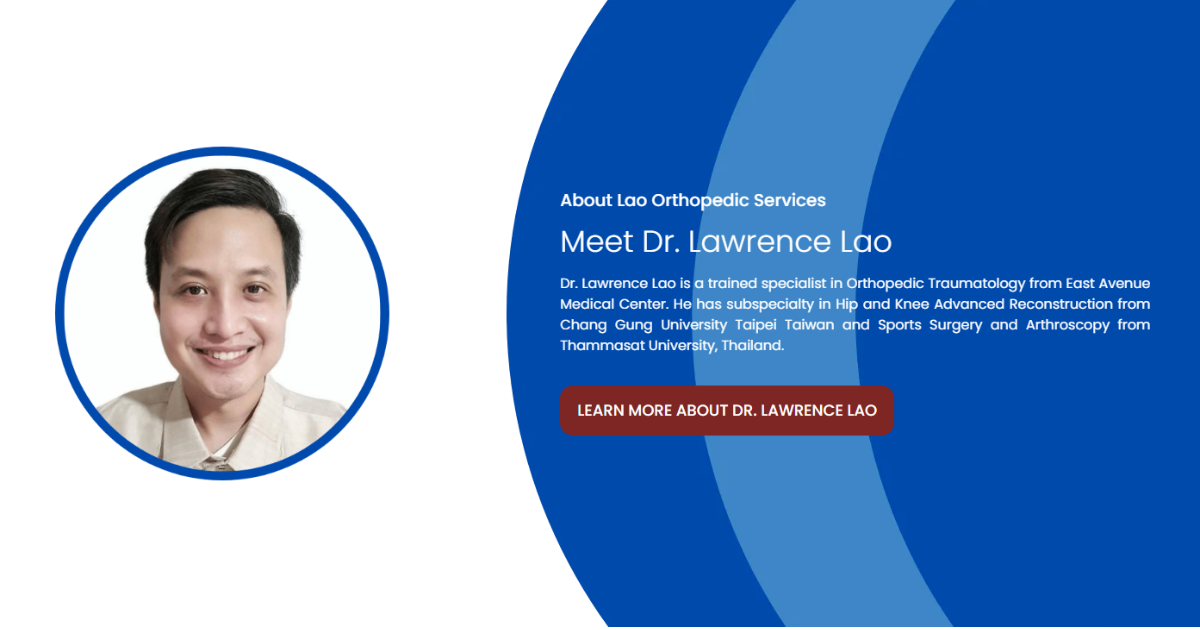
Dr. Lawrence Lao completed specialty training in Orthopedic Traumatology at East Avenue Medical Center. He also received advanced fellowship training in Hip and Knee Reconstruction at Chang Gung University, Taipei, Taiwan, along with Sports Surgery and Arthroscopy at Thammasat University, Thailand.
Patients receive individualized treatment plans based on detailed clinical evaluation, diagnostic imaging, activity level, and personal recovery goals.
From diagnosis through rehabilitation, the clinic remains committed to helping patients regain shoulder strength, improve mobility, and return to everyday activities with greater comfort.
Patients across Bicol, Naga City, Legazpi City, Camarines Sur, and nearby communities seek care at Lao Orthopedic Clinic for advanced orthopedic treatment delivered with compassion and clinical excellence.
Takeaway
Persistent shoulder pain should never be ignored, especially when it affects your ability to work, exercise, or complete everyday tasks. Subacromial decompression offers an effective treatment option for patients with shoulder impingement that has not responded to conservative care. By reducing pressure around the rotator cuff tendons, the procedure can relieve pain, improve shoulder movement, and support long-term function.
A thorough evaluation by an experienced orthopedic surgeon remains the first step toward choosing the most appropriate treatment. At Lao Orthopedic Clinic, Dr. Lawrence Lao provides comprehensive care using advanced arthroscopic techniques and personalized rehabilitation plans to help patients throughout Bicol return to active, comfortable living.
Frequently Asked Questions
Is Subacromial decompression a major surgery?
Subacromial decompression is generally considered a minimally invasive arthroscopic procedure. Small incisions and specialized instruments allow treatment with less disruption to surrounding tissues than traditional open surgery.
How long does Subacromial decompression take?
The procedure commonly takes about one hour, although the exact duration depends on each patient’s condition and whether additional repairs are required.
Will physical therapy be necessary after Subacromial decompression?
Yes. Physical therapy plays a major role during recovery by restoring shoulder movement, strength, flexibility, and overall function.
How soon can I return to work?
Patients with desk jobs may return within a few weeks. Jobs requiring heavy lifting or repetitive overhead activity often require a longer recovery period. Your orthopedic surgeon will provide recommendations based on your progress.
Can shoulder impingement return after Subacromial decompression?
Many patients achieve lasting symptom relief. Maintaining shoulder strength, following rehabilitation instructions, and avoiding excessive repetitive strain may reduce the chance of future problems.
Does Subacromial decompression remove a rotator cuff tear?
The procedure primarily creates additional space beneath the acromion and reduces pressure on the rotator cuff. If a rotator cuff tear is present, your surgeon may recommend repairing it during the same arthroscopic procedure.